
A short link the recipient can trust
A link shortener with QR codes, analytics and an API for businesses that send links to customers. Live at dvnlinks.pl.
- Industry
- SaaS / MarTech
- Location
- Poland
- Team
- Konrad Barejko
// Challenge
Today a short link is an ordinary working tool for a business. It goes into a newsletter, into a reminder text message, onto a leaflet as a QR code, into a social media post. It has to be short and it has to show how many people used it.
The problem is that recipients look at such links with suspicion, and they have good reason to. Around 30% of phishing attacks use shortened links, and 35% of recipients do not trust shortened links. A business that sends customers a short link shares its address with everyone who has used the same shortener for fraud.
Then there is the bill. Between a free plan and USD 25–35 a month at Bitly or Rebrandly there is nothing in the middle. A Polish company pays in dollars for a tool with no Polish-language support. None of the big players really puts privacy first, and GDPR compliance without an extra charge is rare in this market.
The first version of DVN Links was created in May 2025 as a simple shortener with a click counter. It handled 82 links, mostly pointing to articles on digitalvantage.pl. Over the whole of 2025 it received ten code changes, and then nobody touched it for eight months. It worked because it did one thing for one user.
For it to serve other businesses, it was missing everything that separates a tool from a service: accounts, plans, payments, limits, an API and analytics. The constraints were clear too — one person, a self-managed server, zero budget for a team. So every decision had to be something one person could maintain.
// Solution
A dangerous link is never created at all. We check every address at the moment it is shortened — against Google Safe Browsing and against our own filter, which blocks known bad domains, suspicious file extensions and prohibited content categories. If the address fails, the link never reaches the database, and the user gets a message in Polish or English. As a result, a business does not share a domain with a fraudster who is only caught after the fact — the fraudster never gets a link.
An account with no password to remember. Login works through a link sent by email or through a Google account. The login link expires after 15 minutes, and Cloudflare Turnstile protects the form from bots. Anyone who wants to shorten a link does not have to come up with yet another password.
A price list backed by features. There are five plans and a seven-day trial of the Pro plan. Every limit — the number of links and clicks per month, a custom link ending, API access, how long statistics are kept, the look of the QR code — is genuinely enforced, not just listed in a table. Prices and limits live in the admin panel, so changing the price list does not require deploying a new version. The free plan gets the short domain qrln.pl; paid plans also get dvn.dev.
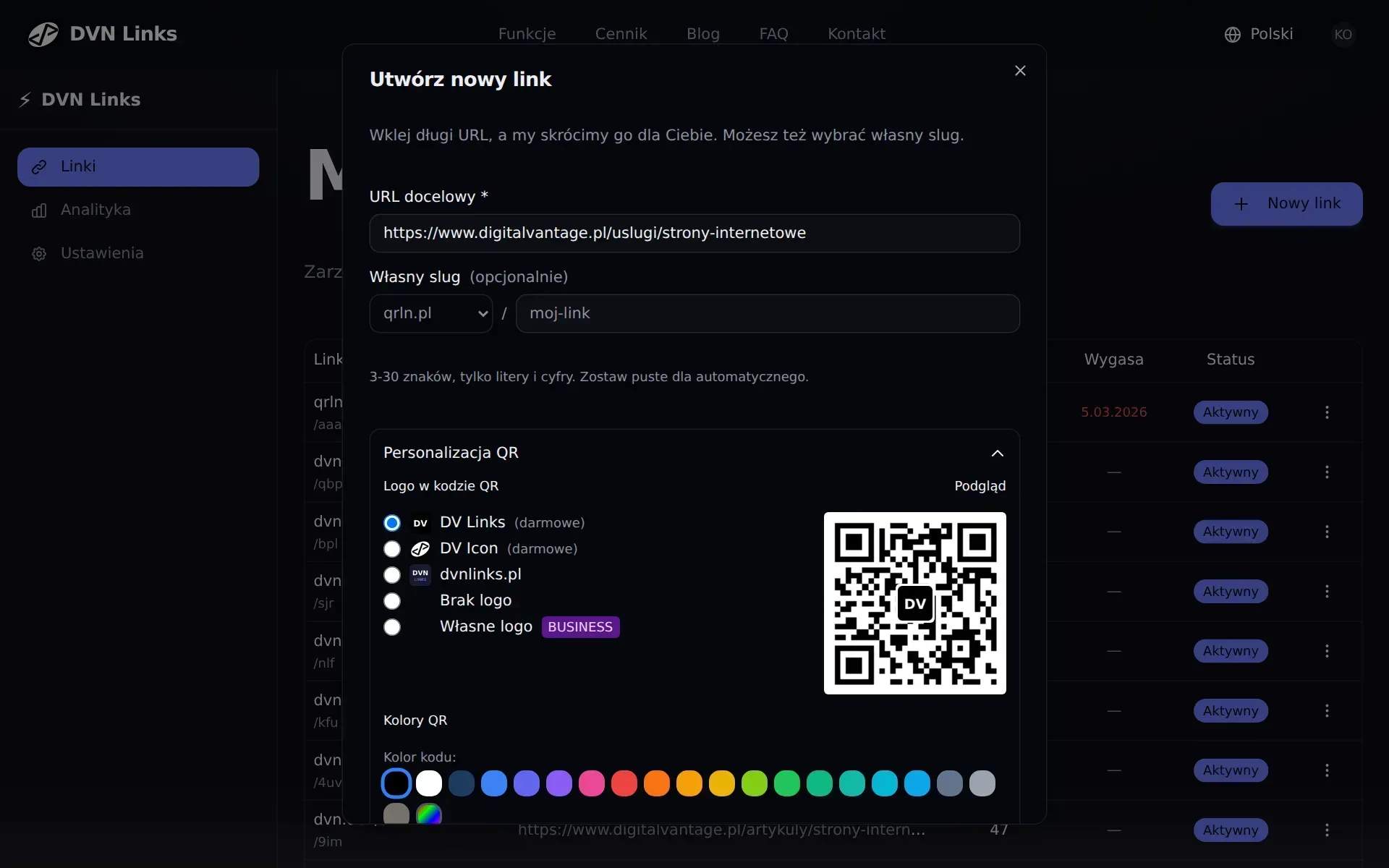
One tool, many uses. A business shortens a link with a custom ending or an automatic one. For the link it can generate a dynamic QR code with colours and a logo, ready to print as PNG or SVG. Statistics for 30 days show clicks day by day, devices, browsers, operating systems and traffic sources. IP addresses are not stored as they are, only as a cryptographic hash, so the business sees traffic, not specific people. Anyone who wants to create links from their own system has a REST API with keys of limited permissions and documentation at /api/docs.
The whole product speaks Polish and English, including page addresses. Along the way we had to fix things users do not see until they go wrong — for example, an English-language browser was sent from /cennik to a page that did not exist, because in English that address is /pricing.
What it looks like · 12
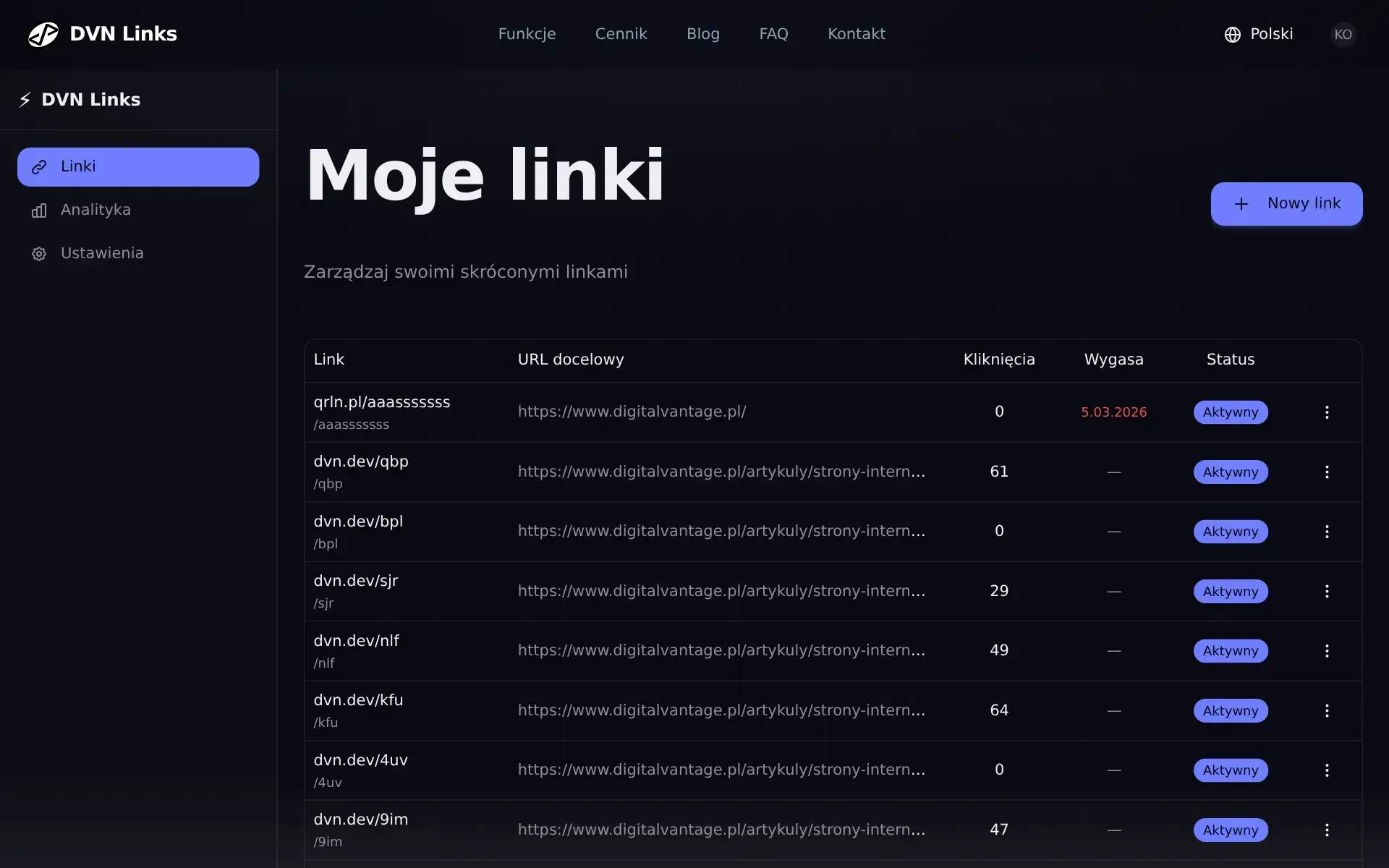
01Dashboard — list of links with click counts
02QR editor — logo, colours and a live preview
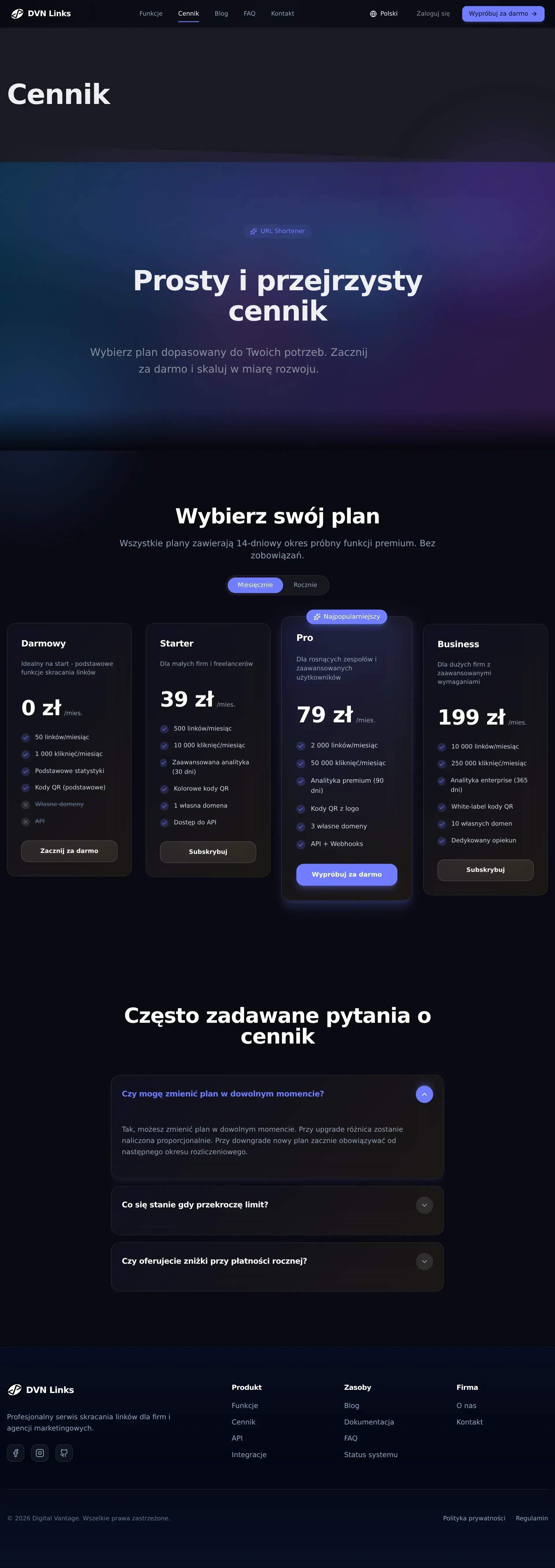
03Pricing — plans generated from the Plans collection
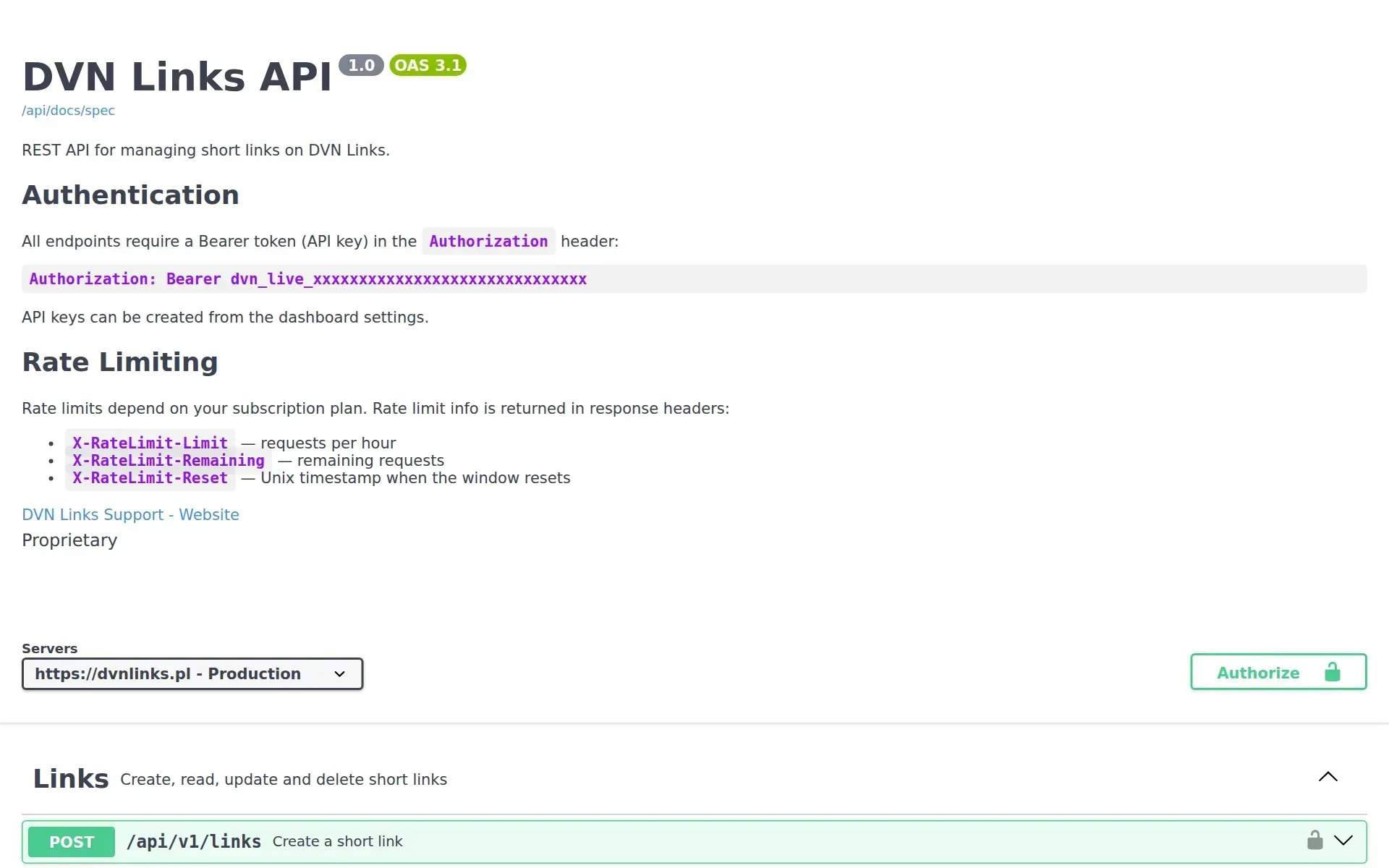
04Swagger UI — REST API v1 documentation
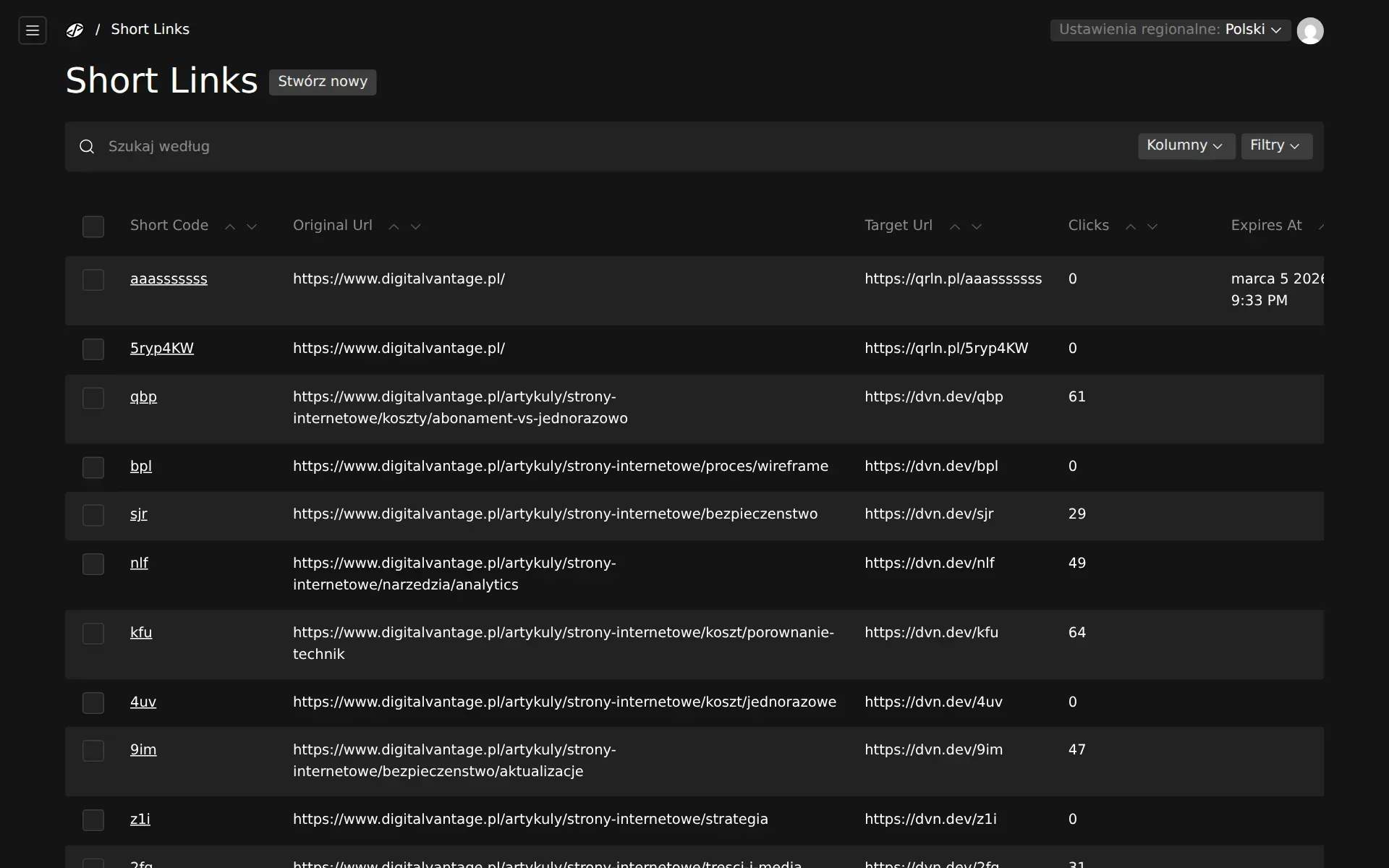
05Payload panel — 14 collections, product data and CMS in one place
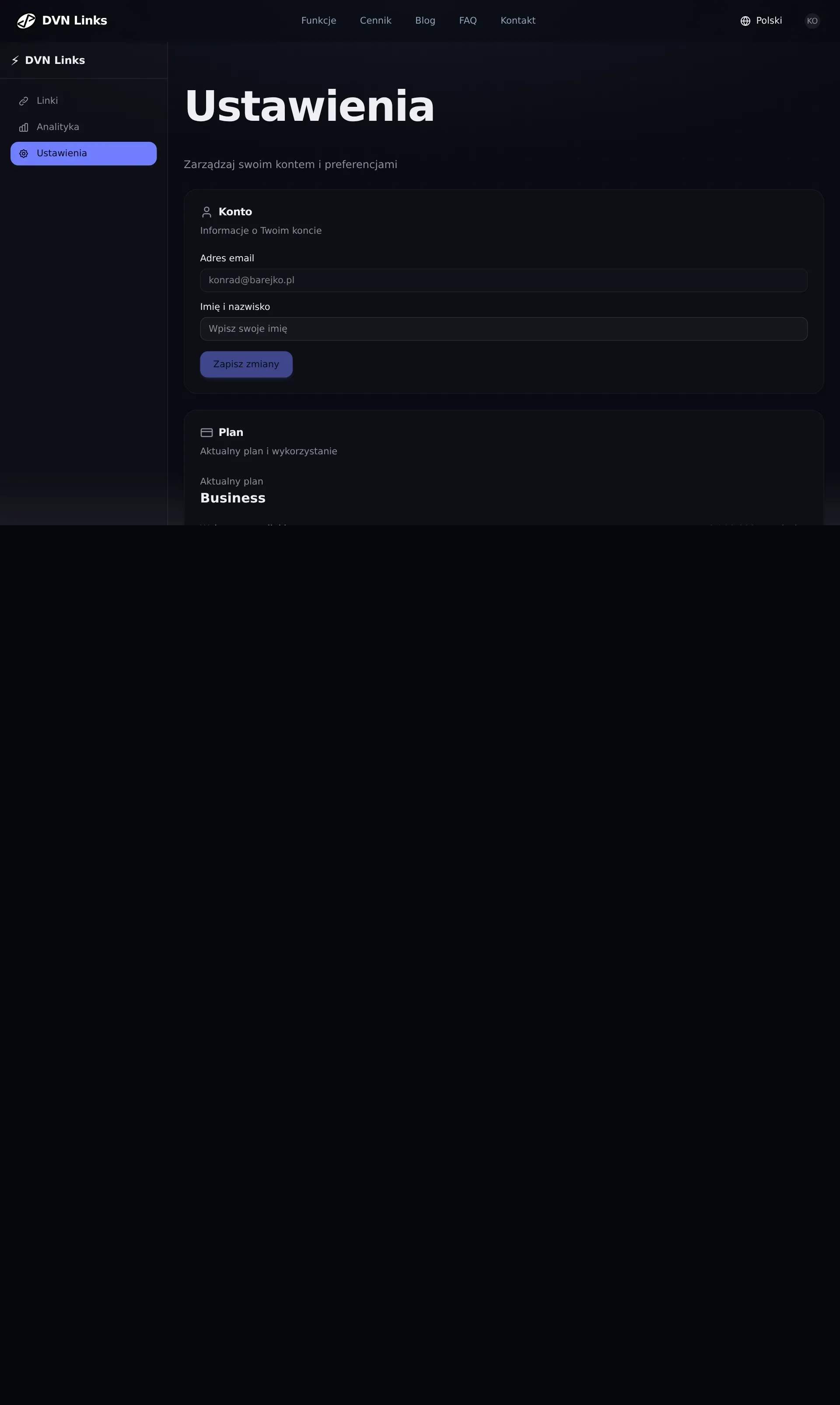
06Settings — plan, limits and API keys
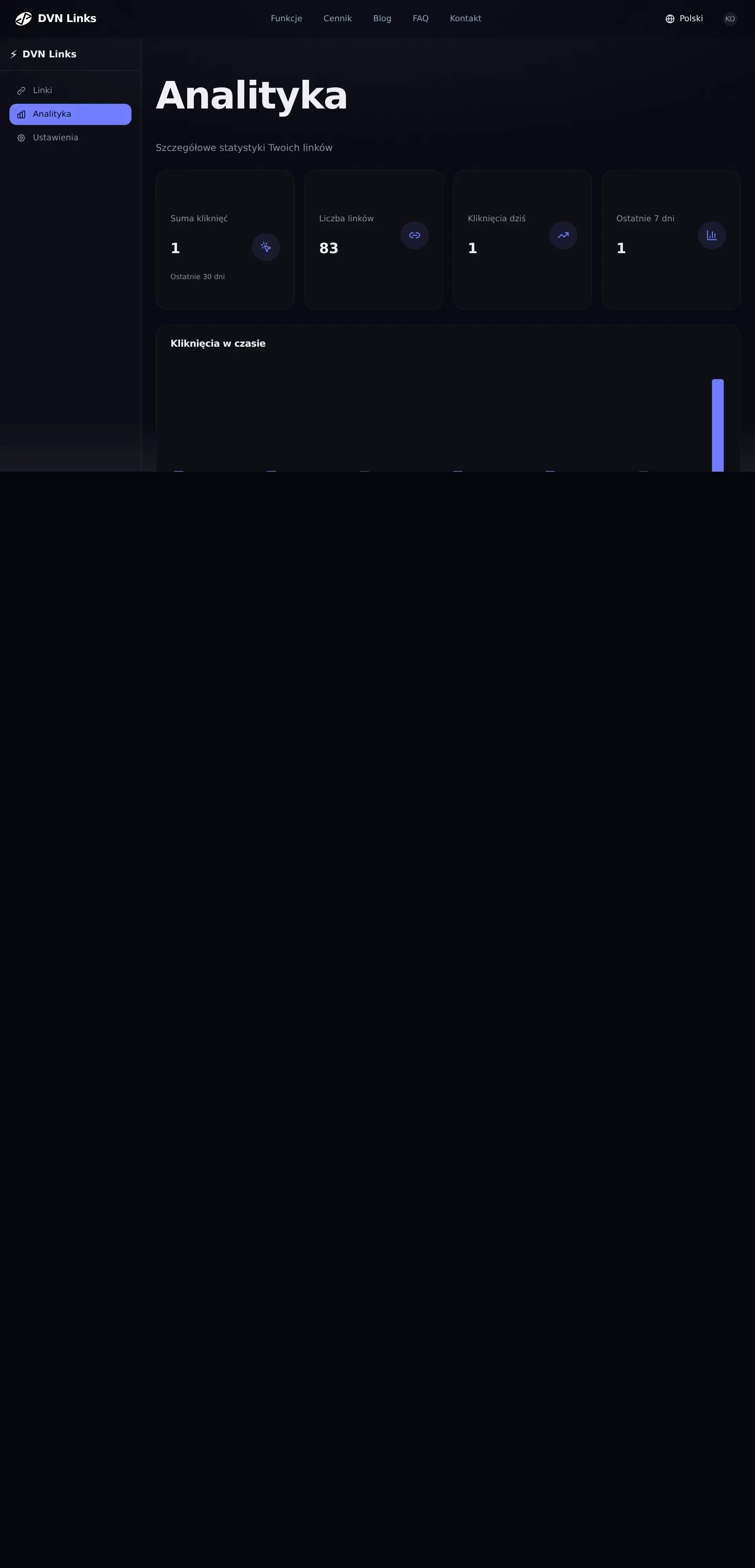
07Analytics — clicks, devices and traffic sources
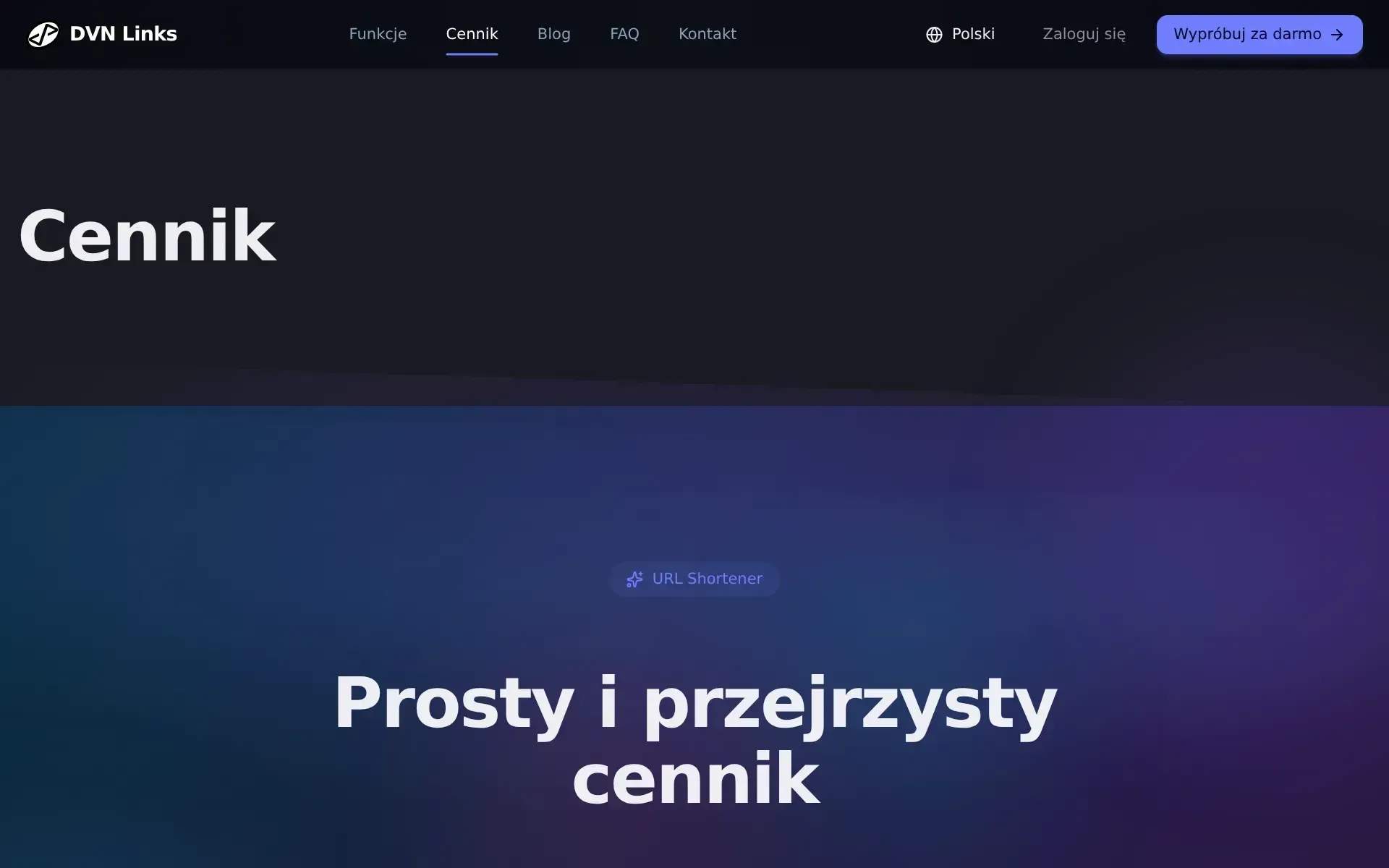
08Pricing — plans generated from the Plans collection
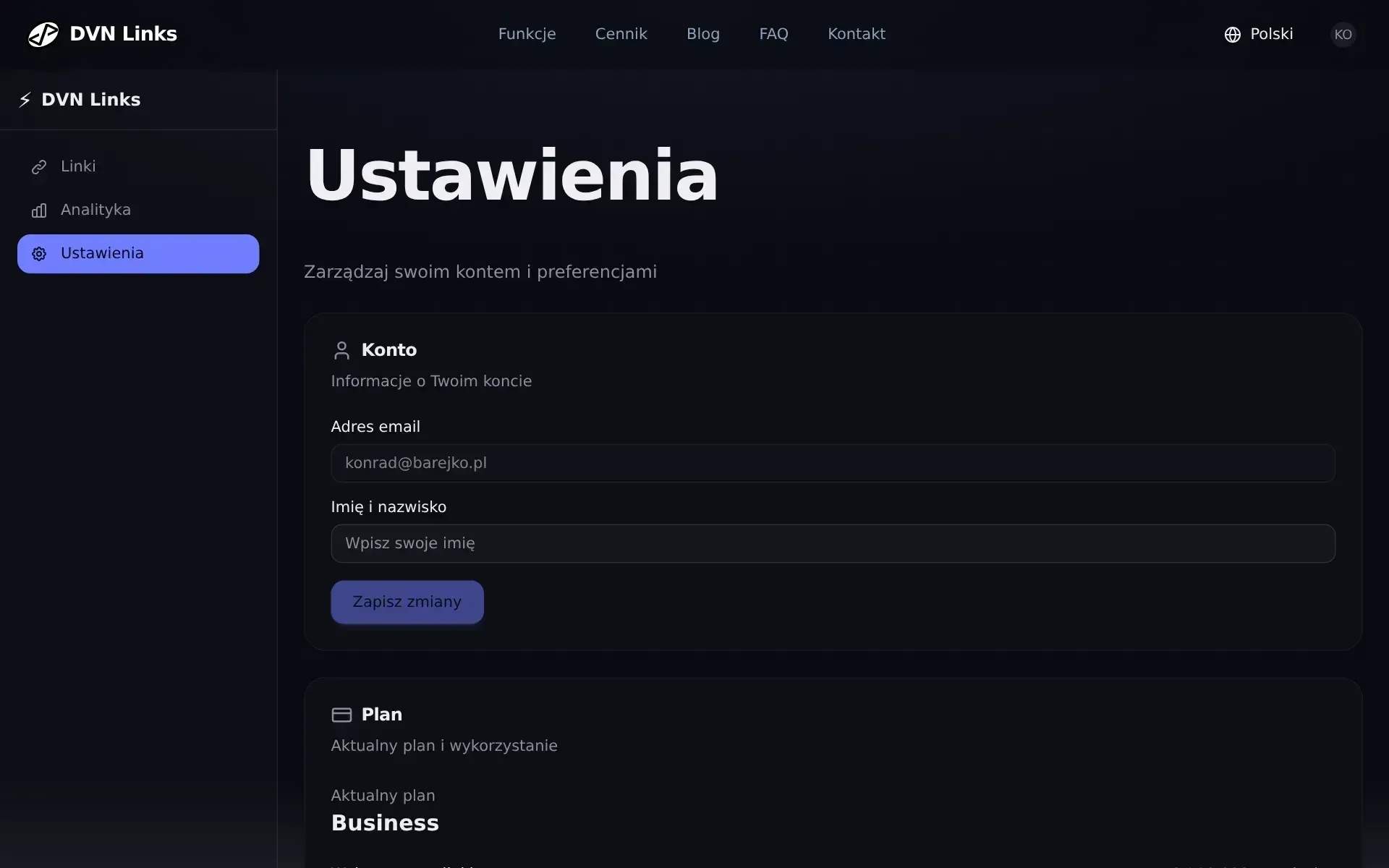
09Settings — plan, limits and API keys
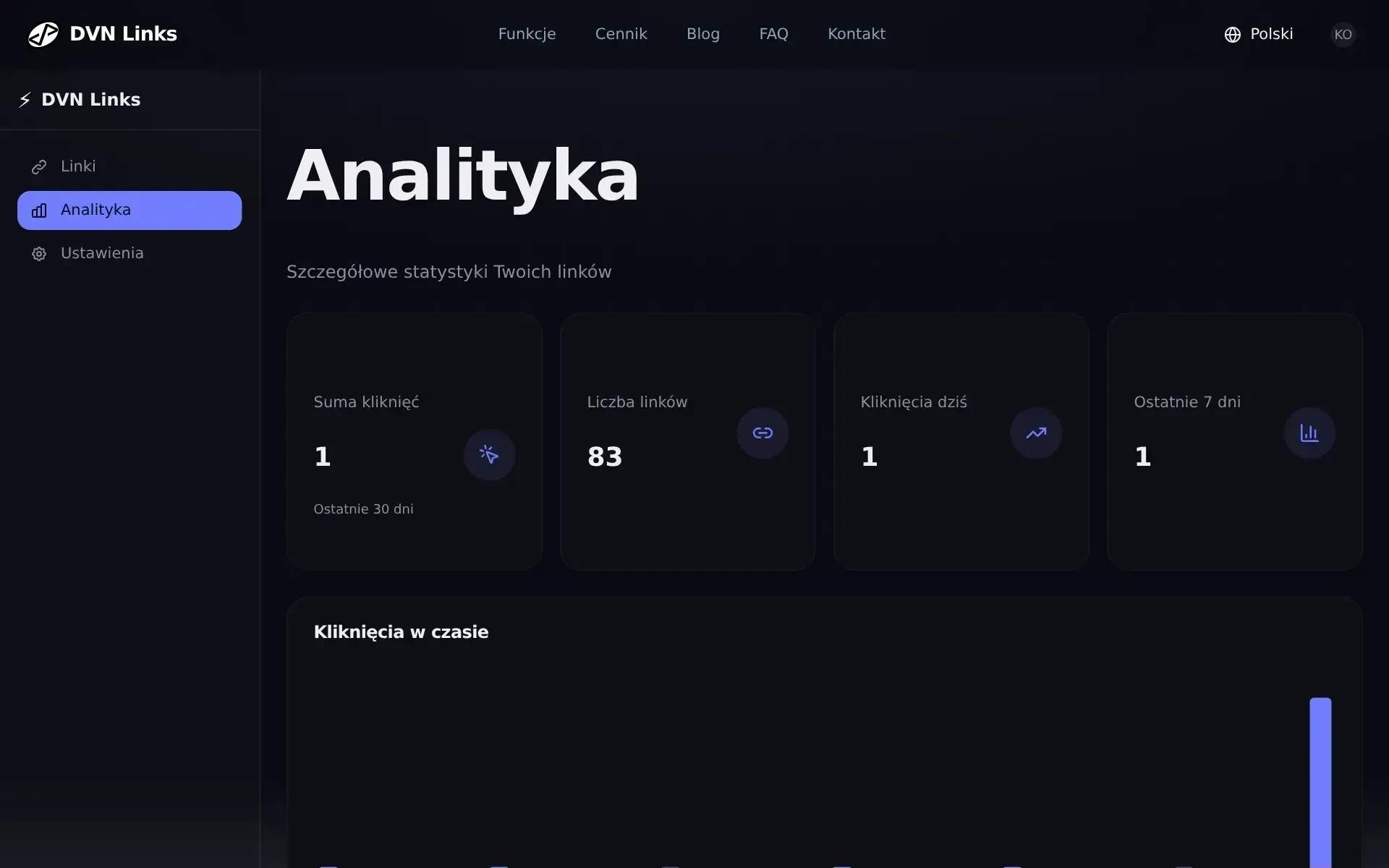
10Analytics — clicks, devices and traffic sources


// results · figures
What came of it
- Clicks preserved when moving 82 linksOld codes, QR codes and click history moved to the new version with nothing lost
- 2,617
- Dangerous addresses in the databaseThe address is checked before the link is created — a bad link is never created
- 0
- Plans priced in Polish zlotyPlan limits are enforced by the system, not by the terms of service
- 5
- QR codes for print and the webThe same link in an email, a text message and on a leaflet
- PNG / SVG
A business that wants to shorten links gets a tool that looks after security on its behalf: a dangerous address is rejected at the moment of shortening, not detected after the fact. It pays for a plan whose limits are real, and sees statistics without collecting recipients' personal data.
The best test was moving the first version. The 82 links from the first version moved to the new one together with 2,617 clicks, the original codes, QR codes and creation dates. No link had to start its history from scratch.
Before its commercial launch, the product went through a security audit.
The service runs on a self-managed server behind Cloudflare, with no bill that grows with traffic. For a product that is not yet earning money, that is a condition for it being able to run at all.
The product runs at dvnlinks.pl with paid plans priced in Polish zloty; we do not give customer or revenue figures here. Custom customer domains, teams and click geolocation are not available yet — they are planned.
// Related
- ServiceSaaS applicationsSaaS application development: multi-tenant architecture, subscriptions and payments, KSeF invoices, white-label. Examples: DVN Links, Domyko, AI chat.
- ArticleSaaS application — how to build your own product from MVP to recurring paymentsA SaaS application from MVP to subscription: the five building blocks, recurring payments in Poland, the legal minimum, costs and the DVN Links example.
- ArticleFreemium or free trial? The SaaS subscription model in numbersFreemium, trial without a card, or trial with a card: ChartMogul conversion data, time-to-value, churn, MRR, LTV:CAC and the Polish cloud market from Eurostat.
15 minutes. Zero selling.
Does your team have a similar job you'd like to take off its plate? Tell us what takes the most time today, and we'll tell you what can be done about it.