
Big-project technology at the price of an ordinary website
One Next.js and Payload CMS platform for many client sites — several times faster to launch, with fixes included in the subscription.
- Industry
- SaaS / website platform
- Location
- Poland
- Delivery time
- 28–31.10.2026
- Team
- Konrad Barejko

// Challenge
Every site dvnt built for a client was a separate, individually written application: its own code, its own server, its own deployment. The law firm's site is 1,585 files and about 92,700 lines of code, the developer's 1,624 files and about 96,700 lines. With a handful of clients that could be carried. Every security fix, new feature or system update, though, meant the same work multiplied by the number of clients, and that number was meant to grow.
That company was us. Every hour spent maintaining a dozen separate applications was an hour taken from client projects, and every new site added more of them. For the client it meant a price: a site in Next.js and Payload is a project worth fifteen to several tens of thousands of złoty, because a separate application is built every time. Companies that could afford WordPress could not buy this technology, and we could not sell it cheaply. The goal in the business plan was therefore concrete: cut the delivery of a company site from 80–150 hours to 25–45 and move to a subscription, in which the client pays for a working site rather than for another project from scratch.
There was also one non-negotiable condition. A site, once moved, has to look exactly like the original. Nothing may be lost along the way. And the differences between clients must not end up as a pile of exceptions in the code that nobody can maintain a year later.
// Solution
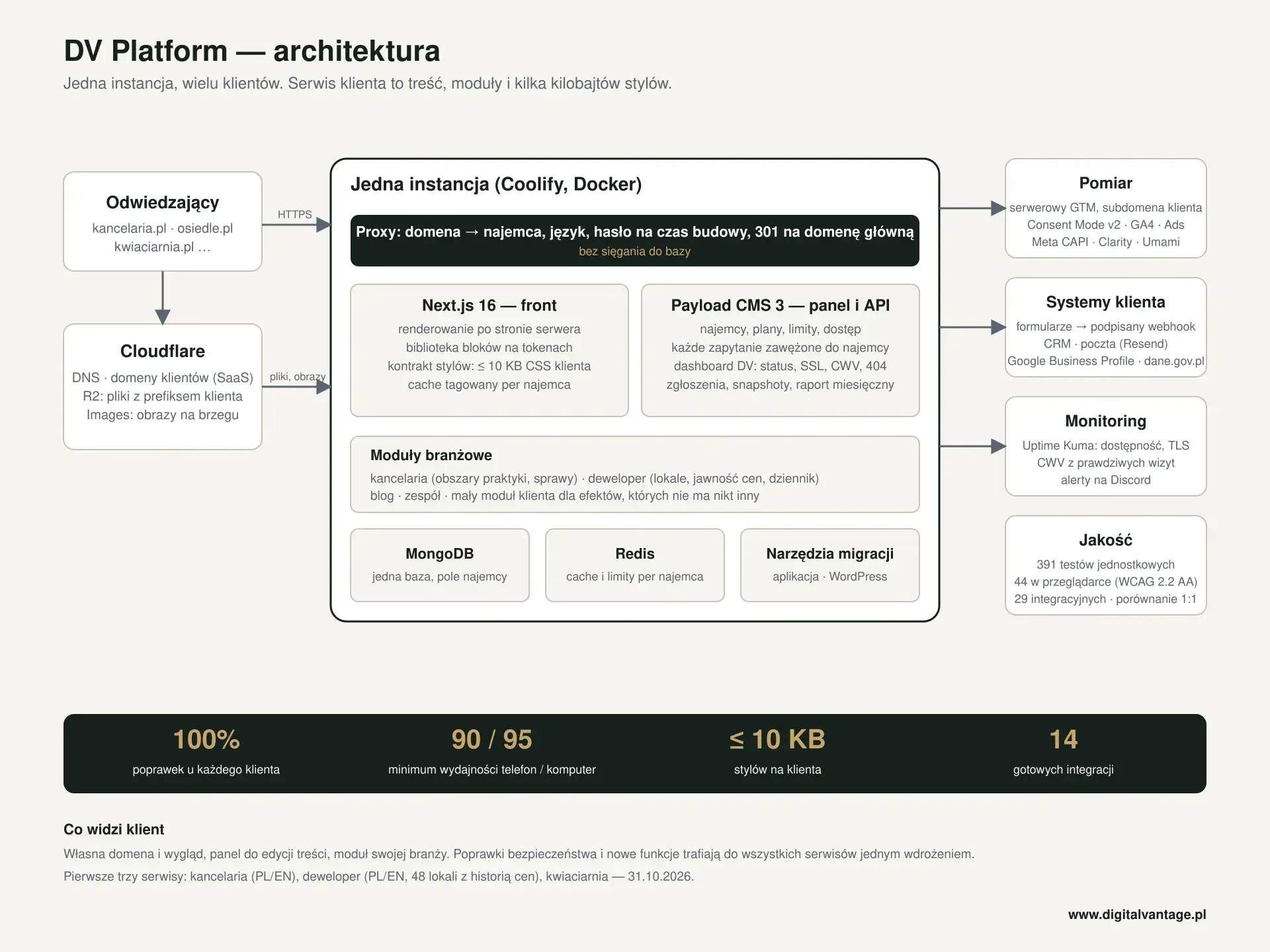
One instance, clients as tenants. One content management system and one front end on one server. Each site is a tenant with its own domains, languages, plan, modules and overrides. Every data query is scoped to the tenant, the cache is tagged with the tenant, and domains are resolved without touching the database. For a client, this means their data and files are theirs, and a platform fix reaches them on the same day as everyone else.
Client differences as modules, not copies. Industries are packages: law firm (practice areas, cases), developer (investments, units, price transparency, construction diary, instalment calculator), blog, team. A module can add a field to another module's collection — for example, practice areas on a team member — instead of copying all the code. For effects nobody else has, we build a small client module.
Look through a contract, not through code. Blocks don't know colours or typefaces, only named values. A client's look is a stylesheet written on public hooks from the contract registry: 176 names in version 0.15. The compiler checks every selector, forbids custom classes and external addresses, and rejects a stylesheet over 10 KB compressed. That way even the most elaborate client look can't spill over onto the platform or break things for others.
Migration as a tool, not manual work. A script moves a site from its existing application: routes, section variants, texts hard-coded in the code, team roles. Separate tools import a site from an old front end's manifest and from WordPress. Old addresses get redirects, and a site built locally goes to production with one command.
Open to the client's systems. Forms send submissions through a signed webhook to any client system, such as a CRM, and have server-side validation, a submission limit and Turnstile instead of a captcha. Tracking runs by default through server-side Google Tag Manager — that is, through the client's own subdomain instead of scripts from third-party domains that browsers block — with Consent Mode v2 and consent per site. Standard events are tracked with no setup: form submission, clicks on phone, email, WhatsApp and map. On top of that: GA4, Google Ads, Meta Pixel with CAPI and enhanced conversions, Clarity, and cookieless Umami for clients without consent. Plus sync with Google Business Profile, a dane.gov.pl report for developers, IndexNow for search engines, email through Resend and monitoring through Uptime Kuma. A WordPress site comes in through an import, not a rewrite.
Comparison measured, not eyeballed. Every page of the original and the platform is compared automatically: first text and titles, then the styles of elements matched by content — size, typeface, colour, position and spacing. The second round of this comparison caught things no person would spot at first glance: a developer's team roles with names taken from a law firm, hidden prices of sold units, missing reading tools in posts, alert boxes in the content. We closed each one with a platform feature that the next client will benefit from.
The hardest things were the invisible ones. A repeated migration left old fields in blocks, because the system keeps whatever an update doesn't provide; hence explicit clean-up. File names were unique across the whole platform, so a second client couldn't have their own logo under the same name; hence a per-tenant index. The server deployed before the tests had finished. Some of the “differences” turned out to be bugs in the original: the old site declared the Inter typeface but never loaded it, so text was shown in the system font. The platform kept the typeface from the design.
What it looks like · 11
01Platform architecture: one instance, tenants, modules, tracking and monitoring
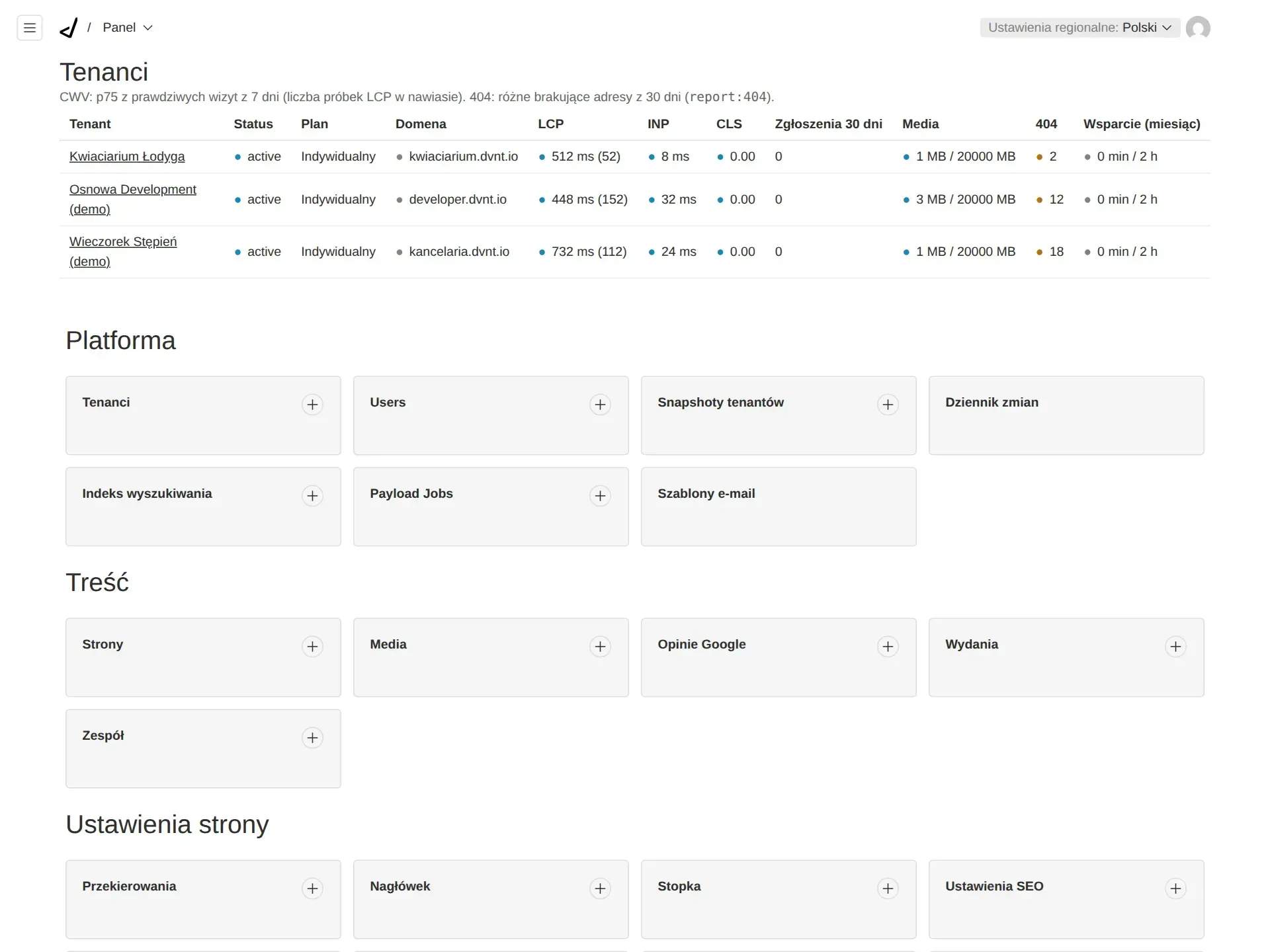
02DV panel: every site with its status, domain, performance from real visits, tickets and support hours
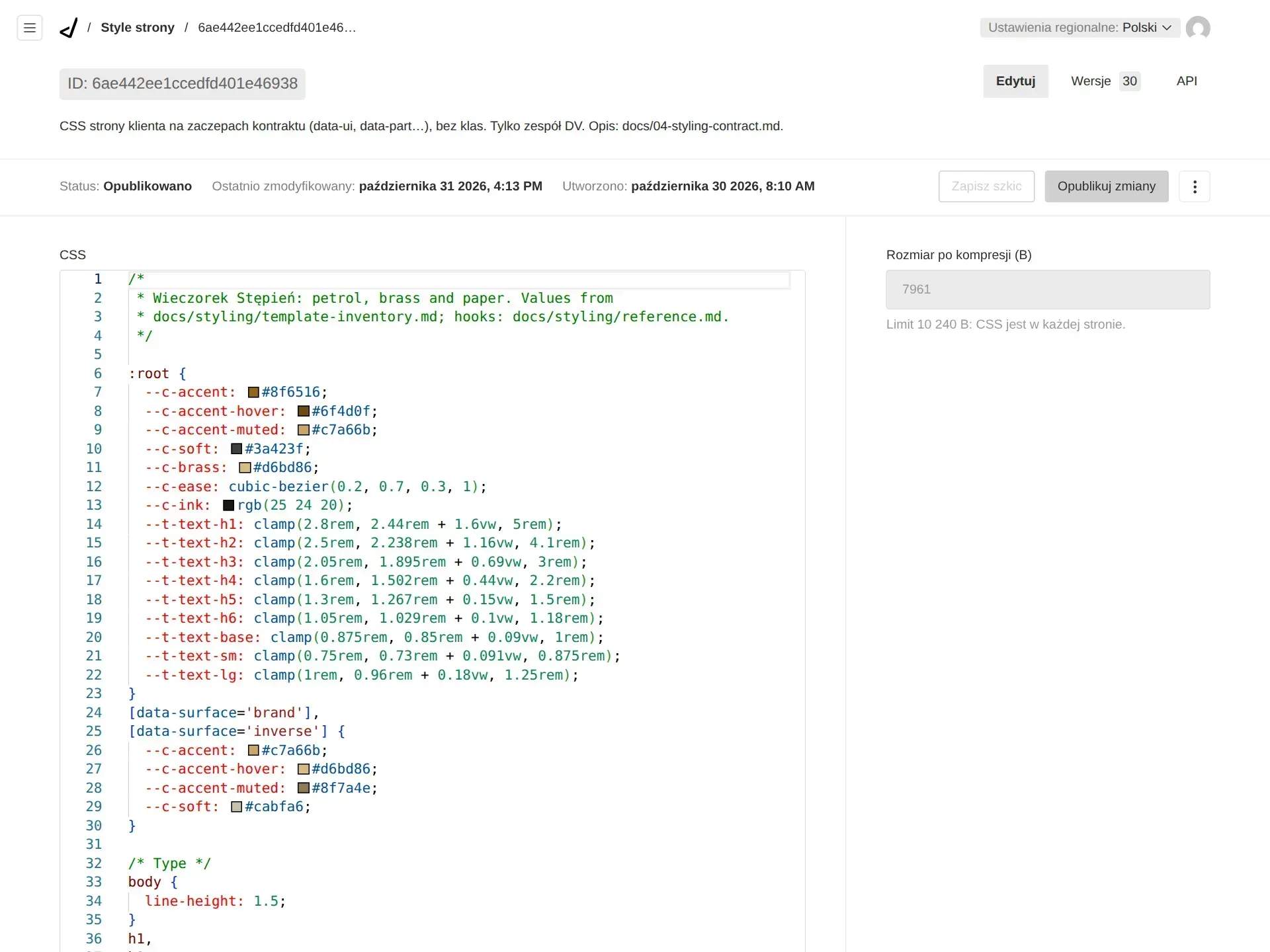
03A client's look is a stylesheet on contract hooks, checked and limited to 10 KB
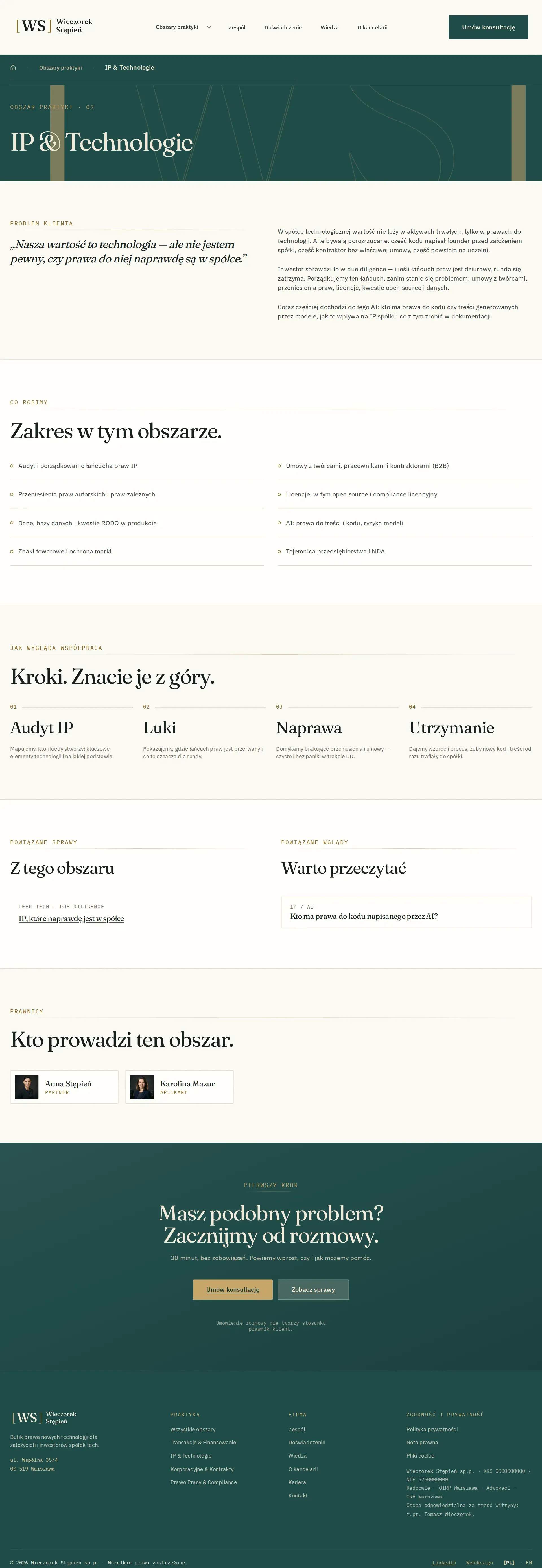
04Law firm module: the client's problem, scope, steps of working together and cases
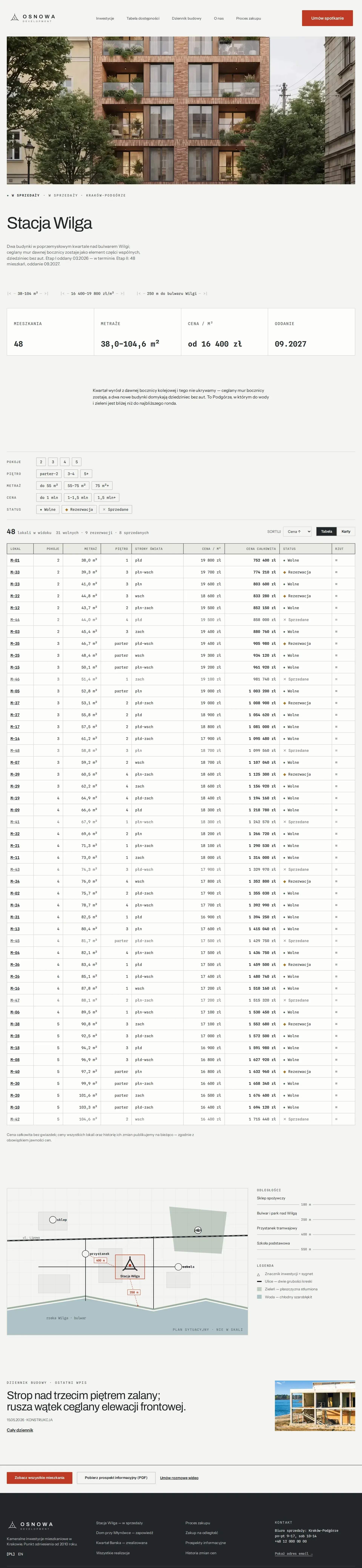
05Developer module: facts, neighbourhood map and an availability table with filters
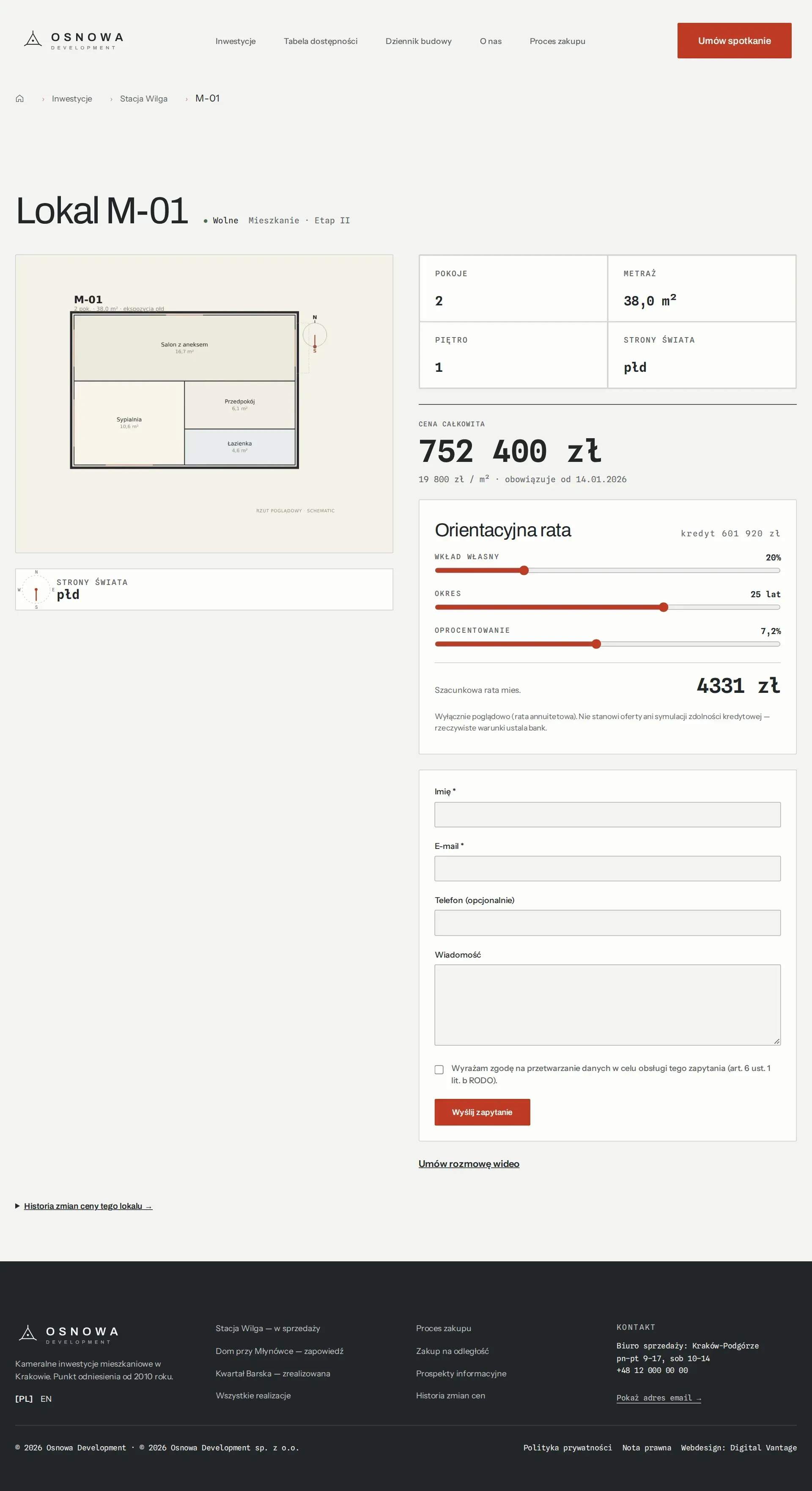
06Unit: total price, price history, instalment calculator and enquiry
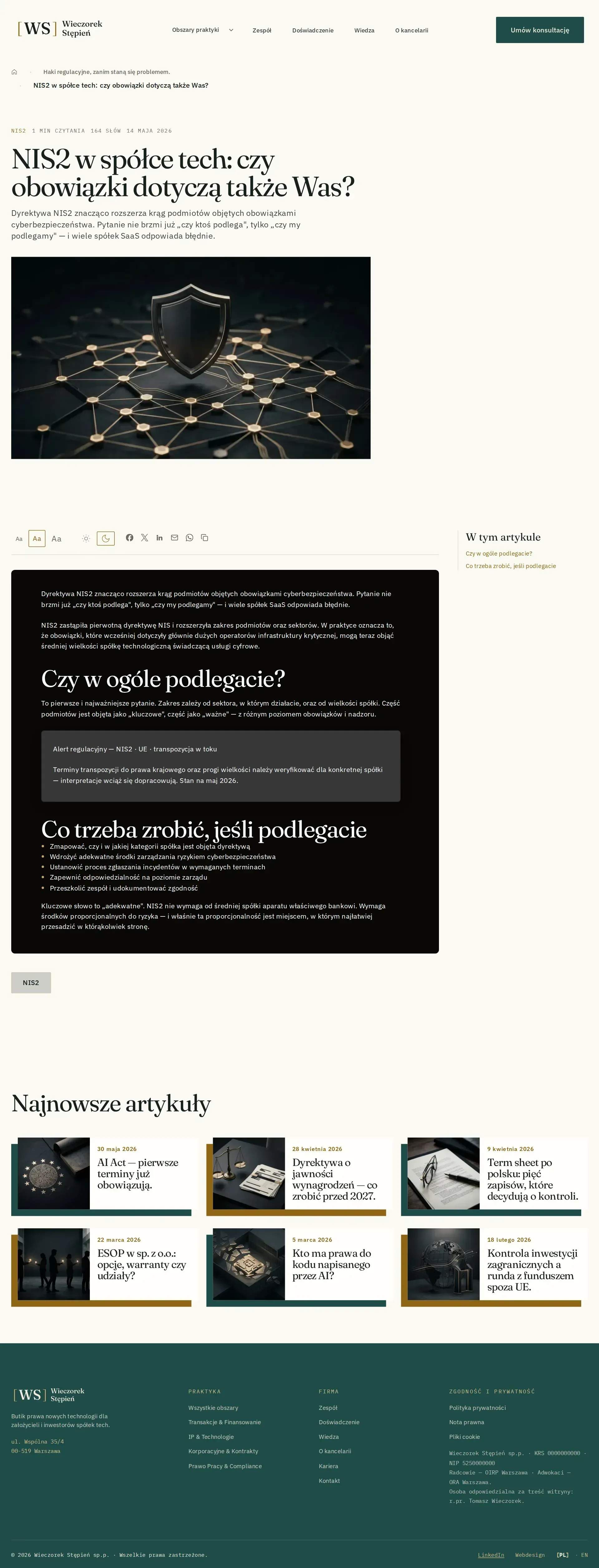
07Post with reading tools — text size, dark background, alert box
08Availability table on a phone

09A florist on the same platform


// results · figures
What came of it
Three sites run on one instance. The law firm in two languages with 13 pages, 7 posts, 6 people, 4 practice areas and 6 matters. The developer in two languages with 14 pages, 3 developments, 48 units with price history and 5 forms. The florist with 4 pages. Old addresses, 83 of the law firm's and 202 of the developer's, lead to the new pages with a 308 redirect.
For the client it is the price and the time that change, not the technology. They get the same class of solution as projects worth tens of thousands of złoty: Next.js, Payload, an industry module, a look of their own. They do not pay for writing and maintaining the application, though, because it is shared. Their part is content and a few kilobytes of styles: 7,961 bytes compressed for the law firm, 7,457 for the developer, 2,827 for the florist, instead of about 95,000 lines of code. That is why delivery is meant to be several times shorter and the price approaches a WordPress site. Fixes, security updates and new features arrive with the subscription to everyone at once, a cost the client used to pay separately in the old model.
The look of the original, checked automatically. After the second round the law firm's home page differs from the original by single pixels in a few places. The developer's page titles match 1:1 on 150 addresses from the original's sitemap; the only exception is the English home page, to which the original gives no title at all. The remaining small differences are written down and queued.
Every site on the platform runs on the same modern engine: Next.js with server-side rendering, images transformed at the network edge, a cache per tenant. Hence a standard the platform keeps for every client: a performance score in Google's tools of at least 90 on mobile and 95 on desktop, with the last production measurement at 95–99.
The platform is guarded by 464 tests: 391 unit tests, 44 browser scenarios including accessibility to WCAG 2.2 AA, and 29 integration tests against the database.
What we do not know yet: how long the delivery of the next client from scratch will really take against the 25–45 hour target, and what one site costs to run. We will measure that on the first client who joins the platform other than by migration. Module path addresses, a shop, a client panel with subscription and a visual editor are in the plan, not in the product.
Two of the three sites are dvnt demonstration brands: the Wieczorek Stępień law firm and the Osnowa Development developer. Their data is fictional; the platform and the migration are not.
// Related
- ServiceSaaS applicationsSaaS application development: multi-tenant architecture, subscriptions and payments, KSeF invoices, white-label. Examples: DVN Links, Domyko, AI chat.
- ArticleMulti-tenant — what it is and how to choose a SaaS architecture for many customersMulti-tenant SaaS: single tenant vs multi-tenant, the silo/pool/bridge models, Row Level Security, GDPR and choosing a model for an MVP.
- ArticleSaaS application — how to build your own product from MVP to recurring paymentsA SaaS application from MVP to subscription: the five building blocks, recurring payments in Poland, the legal minimum, costs and the DVN Links example.
15 minutes. Zero selling.
Does your team have a similar job you'd like to take off its plate? Tell us what takes the most time today, and we'll tell you what can be done about it.